
Category: Case Studies

  • Clean Textbook Ingestion for a RAG-Based CBSE Math Learning Platform

    Clean Textbook Ingestion for a RAG-Based CBSE Math Learning Platform

    Industry: Education / EdTech

    At a glance: MyntiQ Tech built a PDF-to-Markdown ingestion pipeline with PyMuPDF for an AI learning platform for CBSE Class 9 Math. It removes repeated watermarks, links figures to their captions, and records both printed and PDF page numbers. That lets retrieval-augmented generation (RAG) answers cite the textbook page a student actually sees.

    Overview

    This case study covers the first engineering milestone of an AI learning platform MyntiQ Tech is designing for CBSE Class 9 Math. That milestone was turning textbook PDFs into clean, structured text a retrieval system can trust. Answer quality in retrieval-augmented generation (RAG) depends heavily on the source text, so ingestion was built first.

    Business Problem

    • Watermarks repeated on every page of the textbook PDFs.
    • Figures were separated from their captions.
    • Printed page numbers did not match PDF page numbers, so answers could not cite the page a student actually sees.

    How MyntiQ Tech Helped

    • Watermark removal: image hashing finds images that repeat across pages and drops them.
    • Figure extraction: each figure is linked to its caption.
    • Dual page tracking: both the printed page number and the PDF page number (via pdftotext) are recorded.
    • RAG-ready output: Markdown with YAML front matter, ready for chunking and embedding, built with PyMuPDF.
    • Platform design: Nomic embeddings, Qdrant and a BGE reranker. Queries are routed between a self-hosted Llama 3.1 8B for low-stakes questions and Claude via AWS Bedrock for teaching-heavy ones.

    Business Outcomes Delivered

    • Clean, structured source text for the retrieval layer.
    • Answers that can cite the textbook page a student actually sees.
    • Hybrid model routing that keeps low-stakes queries on self-hosted infrastructure.

    Frequently Asked Questions

    Why does PDF ingestion matter for RAG?
    A RAG system can only be as accurate as the text it retrieves. Watermarks, figures separated from their captions, and mismatched page numbers all reduce answer quality and make citations unreliable.

    How do you remove watermarks from textbook PDFs?
    MyntiQ Tech’s pipeline hashes the images on each page and drops images that repeat across pages, which is how watermarks show up.

    How can an AI tutor cite the right textbook page?
    The pipeline records both the printed page number and the PDF page number, so answers can cite the page number printed in the student’s book.

    Which models does the CBSE learning platform use?
    The design routes low-stakes queries to a self-hosted Llama 3.1 8B and teaching-heavy queries to Claude via AWS Bedrock. Retrieval uses Nomic embeddings, Qdrant and a BGE reranker.

    Building an AI product on your own documents? Talk to MyntiQ Tech or browse more case studies.

  • Recall-First Clinical NLP Pipeline for Prioritizing Clinician Review

    Recall-First Clinical NLP Pipeline for Prioritizing Clinician Review

    Industry: Healthcare

    At a glance: MyntiQ Tech prototyped a clinical NLP pipeline that reads clinical notes and flags the ones that may point to a cancer finding, so clinicians review them first. It starts from a TF-IDF and logistic regression baseline, fine-tunes Bio_ClinicalBERT and PubMedBERT, and tunes decision thresholds for recall. The model does not diagnose; clinicians make every clinical decision.

    Overview

    This case study covers a prototype natural language processing pipeline built by MyntiQ Tech. It reads clinical notes and flags the ones that may point to a cancer finding, so clinicians can review those notes first. The pipeline is tuned for recall because, in this setting, a missed case costs more than a false alarm.

    Business Problem

    • Clinical notes are long and full of shorthand, which makes relevant findings easy to miss.
    • Positive cases are rare, so a model judged on overall accuracy can look good while still missing the cases that matter.
    • Any AI in this workflow has to support clinicians, not replace their judgment.

    How MyntiQ Tech Helped

    • Explainable baseline: TF-IDF with logistic regression, so every later model has an honest benchmark.
    • Domain-tuned transformers: Bio_ClinicalBERT and PubMedBERT, fine-tuned for clinical language.
    • Abbreviation expansion: clinical shorthand is expanded before modelling.
    • Class imbalance handling: techniques to account for how rare positive cases are.
    • Recall-tuned thresholds: more notes are flagged for review in exchange for fewer missed cases.

    Business Outcomes Delivered

    • A prioritized review queue that puts the notes most likely to matter in front of clinicians first.
    • A clear guardrail: the model does not diagnose, and the clinical decision stays with people.

    Frequently Asked Questions

    Why optimize clinical NLP for recall instead of accuracy?
    In clinical text, a missed case usually costs more than a false alarm. Tuning for recall flags more notes for review in exchange for fewer missed cases. Accuracy can look high even when rare positive cases are missed.

    Which models work well for clinical notes?
    In this pipeline, MyntiQ Tech fine-tuned Bio_ClinicalBERT and PubMedBERT, transformer models pre-trained on medical language. It compared them against a TF-IDF and logistic regression baseline.

    Does the model diagnose cancer?
    No. It only decides which notes a clinician should read first. Every clinical decision stays with clinicians.

    How are clinical abbreviations handled?
    Clinical shorthand is expanded before the text reaches the model, because notes are full of abbreviations that general language models misread.

    Exploring AI for clinical documentation or healthcare workflows? Talk to MyntiQ Tech or browse more case studies.

  • MAEP: A Self-Hosted AI Engineering Platform for Faster, Observable Client Delivery

    MAEP: A Self-Hosted AI Engineering Platform for Faster, Observable Client Delivery

    Industry: Software Engineering / AI (Internal Platform)

    At a glance: MAEP (the myntiQ AI Engineering Platform) is a self-hosted platform built by MyntiQ Tech. It runs on a k3s cluster on the company’s own Dell PowerEdge R730 server. It combines Keycloak single sign-on, Gitea, Jenkins CI/CD, Langfuse LLM tracing, Claude models via AWS Bedrock, and ready-made project templates, so every client project starts with the same engineering conventions.

    Overview

    This case study covers MAEP, the myntiQ AI Engineering Platform. MAEP is the internal platform every MyntiQ Tech client project starts on. It runs on a k3s cluster on a Dell PowerEdge R730 server that MyntiQ Tech owns and operates. It brings source control, CI/CD, single sign-on, AI model access and observability onto infrastructure the team controls.

    Business Problem

    • Building AI systems for clients needs version control, CI/CD, single sign-on and visibility into every model call.
    • Spreading these across a dozen SaaS tools gets messy, and client code and prompts end up in too many places.
    • Starting each new project from an empty folder made it hard to apply the same engineering conventions every time.

    How MyntiQ Tech Helped

    • Single sign-on: Keycloak across every engineering tool.
    • Source control and CI/CD: Gitea and Jenkins.
    • LLM observability: Langfuse traces prompts, latency and cost on every model call.
    • Model access: Claude models via AWS Bedrock, routed by task.
    • Reproducible infrastructure: Terraform and Ansible.
    • Project templates: template repos for Node/TypeScript, Python/FastAPI, React/Next.js, React Native and Angular. Each ships with linting, tests, a Jenkinsfile and an AGENTS.md file that tells AI coding assistants the team’s conventions.

    Business Outcomes Delivered

    • Client projects start from proven conventions instead of an empty folder.
    • Code and prompts stay on infrastructure MyntiQ Tech controls.
    • Every AI call can be observed from the first day of a project.
    • Next on the roadmap: one-command developer onboarding.

    Frequently Asked Questions

    What is MAEP?
    MAEP is the myntiQ AI Engineering Platform: MyntiQ Tech’s self-hosted platform for building AI and software systems. It brings single sign-on, source control, CI/CD, LLM tracing and model access together on infrastructure the company controls.

    Why self-host an AI engineering platform?
    Self-hosting keeps client code and prompts on infrastructure the team controls instead of spreading them across many SaaS tools. It also makes every AI call observable from day one.

    How does MyntiQ Tech monitor LLM calls?
    MyntiQ Tech traces prompts, latency and cost on model calls with Langfuse, the same way it monitors APIs.

    What is AGENTS.md?
    AGENTS.md is a file in each MyntiQ Tech template repo. It sets out the team’s coding conventions for AI coding assistants as well as for engineers.

    Building an AI product and want an engineering partner with this foundation? Talk to MyntiQ Tech or browse more case studies.

  • Phased ERPNext Rollout for an Industrial Automation Manufacturer

    Phased ERPNext Rollout for an Industrial Automation Manufacturer

    Industry: Manufacturing (Industrial Automation)

    At a glance: MyntiQ Tech, a software and AI engineering company based in Ahmedabad, India and Danbury, Connecticut, USA, planned a phased ERPNext implementation for an industrial automation manufacturer in Ahmedabad. The plan moves 50–70 users off a desktop ERP in three phases over 26 weeks, starting with 9 core modules and GST compliance.

    Overview

    This case study covers the ERPNext rollout MyntiQ Tech planned for an Ahmedabad industrial automation company working in SCADA, panel manufacturing and project-based engineering. Around 50–70 users across sales, stores, production and projects are moving off a desktop ERP. Instead of a single big-bang go-live, the rollout is planned in three phases over 26 weeks.

    Business Problem

    • Sales, stores, production and projects all ran on an ageing desktop ERP.
    • Switching every module on at once would put every department through change on the same day, which is a common way for ERP projects to stall.
    • Leads came from many sources, including IndiaMart, the website, telecalling, email and referrals, and each needed to be tracked properly.
    • Stores, warehousing and project support needed tools that matched how the team actually works.

    How MyntiQ Tech Helped

    • Phase 1 (11 weeks): 9 core ERPNext modules, email integration and GST compliance.
    • Phase 2: 8 additional modules, plus WhatsApp and SMS.
    • Phase 3: advanced modules and AI features, built on clean operational data.
    • CRM lead sources: set up for IndiaMart, the website, telecalling, email and referrals.
    • Barcode scanning: for stores and warehousing.
    • Helpdesk: linked to customers and projects.
    • Microsoft email integration: so the team keeps working in the tools it already uses.

    Business Outcomes Delivered

    • A rollout sequence that puts the daily essentials first, depth second, and AI once the data is ready.
    • Less disruption, because each department adopts the core system before more modules arrive.

    Frequently Asked Questions

    How long does an ERPNext implementation take for a manufacturing company?
    For this 50–70 user industrial automation manufacturer, MyntiQ Tech planned 26 weeks in three phases. The first phase, covering 9 core modules, email integration and GST compliance, takes 11 weeks.

    Why use a phased ERP rollout instead of a big-bang go-live?
    A phased rollout lets each department adopt the core system before more modules arrive. That lowers disruption and the risk of the project stalling. AI features come last, once the operational data is clean.

    Can ERPNext handle GST compliance and IndiaMart leads?
    Yes. In this rollout, GST compliance is part of Phase 1, and the CRM is set up to capture leads from IndiaMart, the website, telecalling, email and referrals.

    Who implements ERPNext in Ahmedabad?
    MyntiQ Tech implements, customizes and migrates to ERPNext from its office in Prahladnagar, Ahmedabad, including migrations from Tally, SAP and Odoo.

    Planning an ERP move for your manufacturing business? Talk to MyntiQ Tech or browse more case studies.
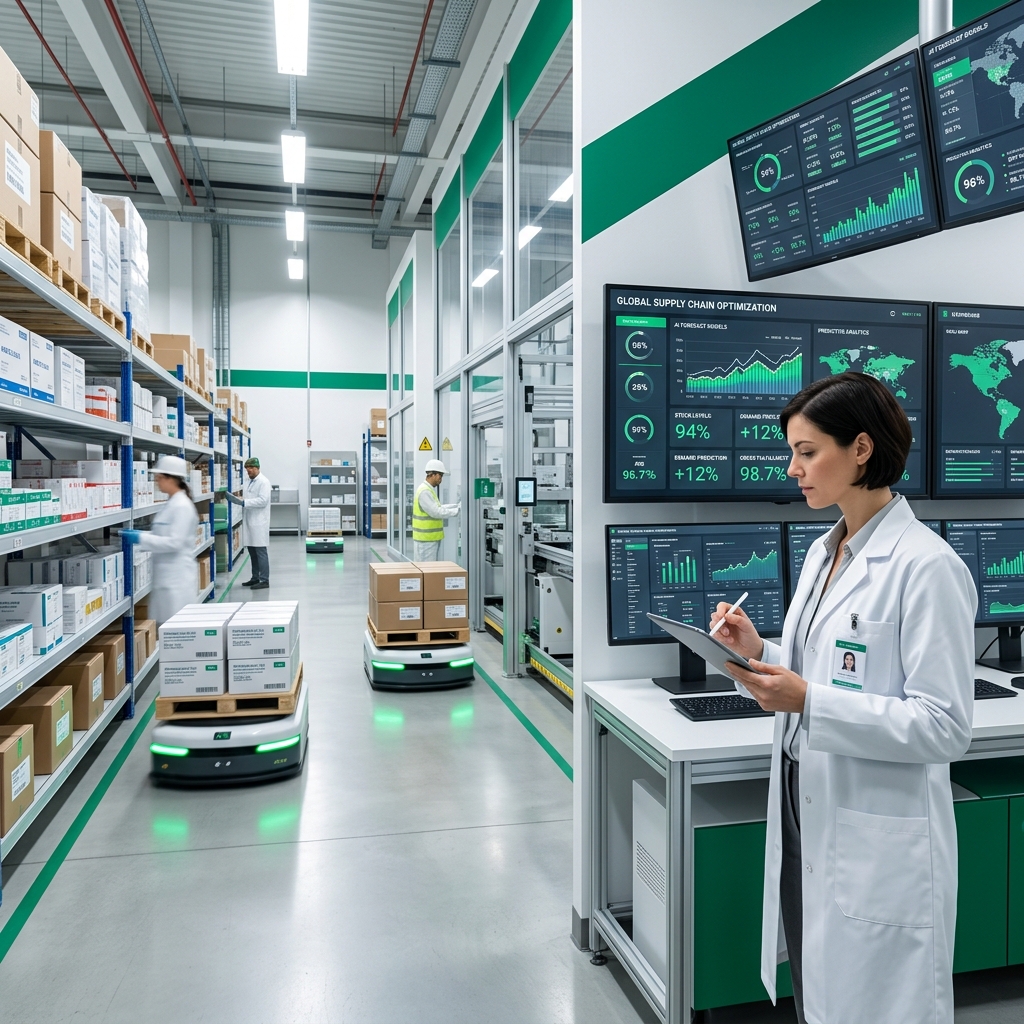
  • AI-Driven Supply Chain Forecasting and Inventory Optimization for a Pharmaceutical Manufacturer

    AI-Driven Supply Chain Forecasting and Inventory Optimization for a Pharmaceutical Manufacturer

    Industry: Pharmaceutical / Manufacturing

    At a glance: MyntiQ Tech built an AI demand forecasting and inventory optimization platform for a pharmaceutical manufacturer. Machine learning models project drug demand, dynamic safety-stock planning adjusts reorder triggers, and unified logistics data reduce stockouts, holding costs and waste from expired batches.

    Overview

    This case study covers the development of a predictive supply chain and inventory replenishment platform for a pharmaceutical manufacturing network. By applying machine learning models to warehouse stocks and regional order forecasts, the solution cuts storage costs and minimizes waste.

    Business Problem

    The pharmaceutical manufacturer struggled with supply chain issues:

    • Stockouts of active ingredients delayed critical drug production runs.
    • High inventory holdings tied up millions in capital, with substantial annual waste from expired medical batches.
    • Fluctuating global demand made manual scheduling systems inaccurate.

    How MyntiQ Tech Helped

    MyntiQ Tech deployed a smart supply chain management system:

    • Predictive Demand Engine: Built machine learning models analyzing clinical trial records, regional pharmacy orders, and epidemiological data to project drug sales.
    • Dynamic Reorder Planner: Implemented safety-stock optimization models that calculate safety margins and adjust reorder triggers dynamically.
    • API Integration: Unified logistics databases across international production facilities and distribution hubs.

    Business Outcomes Delivered

    • Reduced inventory holding costs, freeing up capital.
    • Cut manufacturing production delays due to ingredient shortages.
    • Minimized waste from expired product batches, improving operating margins.

    Frequently Asked Questions

    How does AI forecast pharmaceutical demand?
    Machine learning models analyze clinical trial records, regional pharmacy orders and epidemiological data to project drug sales.

    What is dynamic safety-stock optimization?
    Instead of fixed reorder points, models calculate safety margins and adjust reorder triggers as demand changes. That reduces both stockouts of active ingredients and excess inventory.

    How does better forecasting reduce pharmaceutical waste?
    Holding the right amount of stock means fewer batches expire on the shelf, which cuts waste and frees up capital.

    Optimizing a manufacturing supply chain? Talk to MyntiQ Tech or browse more case studies.
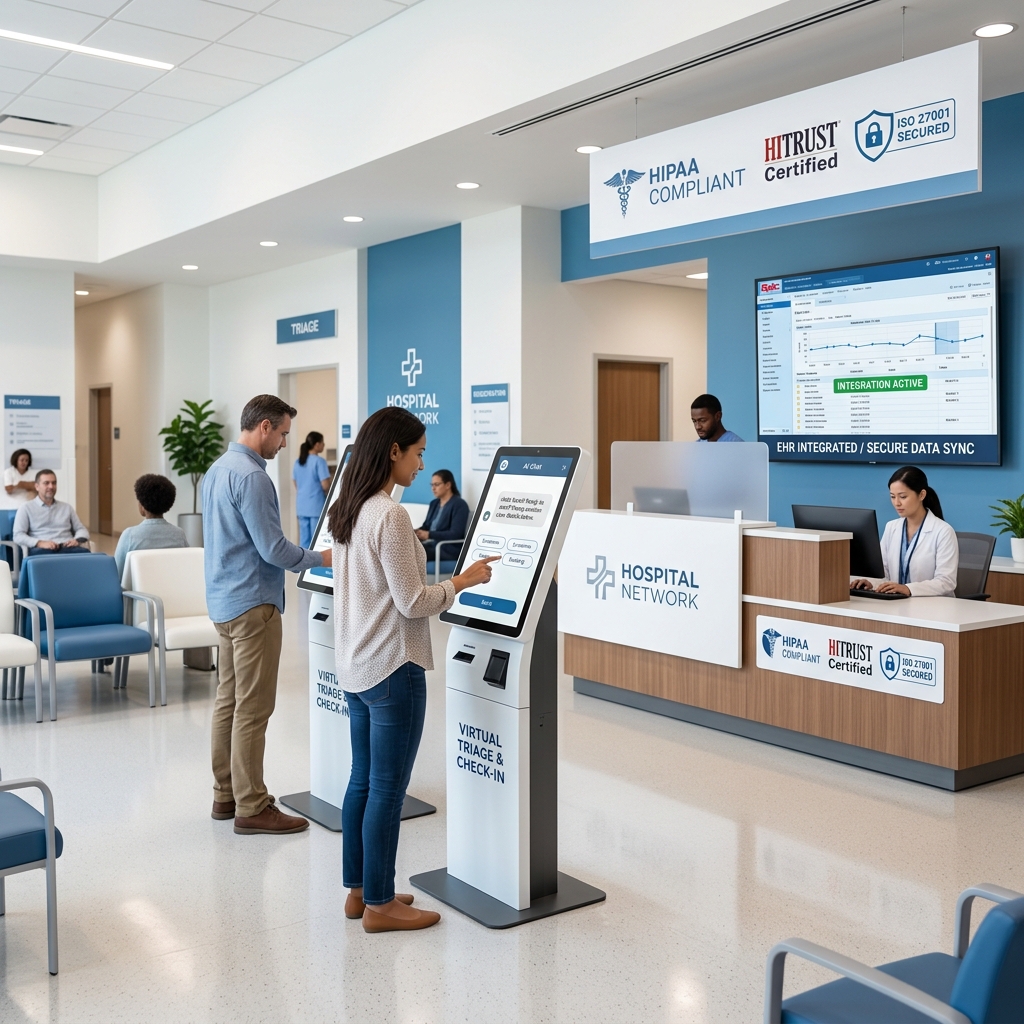
  • HIPAA-Compliant Conversational AI and Virtual Patient Triage for a Regional Hospital Network

    HIPAA-Compliant Conversational AI and Virtual Patient Triage for a Regional Hospital Network

    Industry: Healthcare / Clinical Systems

    At a glance: MyntiQ Tech deployed a HIPAA-compliant conversational AI assistant for a regional hospital network. It triages symptoms using standardized clinical guidelines and books appointments in real time through Epic EHR integration. It uses end-to-end encryption, multi-factor authentication and audit logging.

    Overview

    This case study details the deployment of a secure, HIPAA-compliant conversational AI virtual assistant for a regional hospital network. Integrated with electronic health records (EHR), the chatbot guides patient symptom triage, automates appointment bookings, and handles prescription refills safely.

    Business Problem

    The hospital network faced high administrative costs:

    • Call centers were overloaded with simple patient inquiries, causing wait times to spike.
    • Nurses spent valuable hours answering routine symptom questions instead of providing care.
    • Scheduling errors led to vacant clinic slots and long patient check-in queues.
    • Strict HIPAA requirements prevented the use of standard customer support chatbots.

    How MyntiQ Tech Helped

    MyntiQ Tech built a secure, healthcare-grade virtual assistant:

    • HIPAA-Compliant Architecture: Implemented end-to-end data encryption, multi-factor user authentication, and secure audit logging.
    • Intelligent Symptom Triage: Programmed a symptom check engine using standardized clinical guidelines to direct patients to self-care, urgent care, or emergency facilities.
    • EHR Integration: Connected the assistant to the network’s Epic EHR platform to enable automated, real-time appointment booking.

    Business Outcomes Delivered

    • Handled high volumes of patient queries without human intervention, maintaining 100% data security.
    • Assisted patients with virtual check-ins, reducing administrative workloads.
    • Optimized clinic schedules, reducing appointment scheduling delays and improving provider utilization.

    Frequently Asked Questions

    What makes a healthcare chatbot HIPAA-compliant?
    In this deployment, MyntiQ Tech used end-to-end data encryption, multi-factor user authentication and secure audit logging, because standard customer-support chatbots don’t meet HIPAA requirements.

    How does an AI assistant triage patient symptoms?
    A symptom-check engine built on standardized clinical guidelines directs patients to self-care, urgent care or emergency facilities.

    Can a hospital chatbot book appointments in Epic?
    Yes. The assistant is connected to the network’s Epic EHR and books appointments automatically in real time.

    Exploring conversational AI for healthcare? Talk to MyntiQ Tech or browse more case studies.

  • AI-Based Property Valuation and Predictive Rental Yield Modeling for Real Estate Portfolios

    AI-Based Property Valuation and Predictive Rental Yield Modeling for Real Estate Portfolios

    Industry: Real Estate / Asset Management

    At a glance: MyntiQ Tech built an AI property valuation and rental yield platform for a commercial real estate fund. It combines an automated valuation model (AVM) trained on geospatial and sales data, 5-year rent and yield forecasts, and an acquisition screener that scans MLS listings for underpriced properties.

    Overview

    This case study covers the design of a property valuation and rental yield forecasting platform for a commercial real estate fund. The machine learning solution aggregates macroeconomic indicators, neighborhood demographics, and historical transaction logs to automate property appraisal and portfolio yield forecasting.

    Business Problem

    The real estate fund faced strategic growth limits:

    • Property valuations relied on manual appraisals, making it difficult to review more than a dozen deals per month.
    • Predicting future rental yield trends was subjective and failed to account for complex urban shifts.
    • Static pricing models meant rent adjustments lagged local market trends, reducing rental income.

    How MyntiQ Tech Helped

    MyntiQ Tech built a smart real estate valuation tool:

    • Automated Valuation Model (AVM): Trained regression models on geospatial records, local crime rates, transit proximity, and sales histories to value assets instantly.
    • Yield Forecasting Engine: Developed time-series forecasting models to predict rent pricing trends and asset yield paths over a 5-year horizon.
    • Acquisition Screener: Built a data portal that scans thousands of MLS listings, flagging underpriced properties matching the fund’s investment criteria.

    Business Outcomes Delivered

    • Reduced deal due diligence times, allowing the fund to act faster on hot opportunities.
    • Identified several undervalued commercial properties that were successfully acquired.
    • Adjusted lease rates to market conditions, increasing recurring rental income.

    Frequently Asked Questions

    What is an automated valuation model (AVM)?
    An AVM values property with machine learning instead of a manual appraisal. This one uses regression models trained on geospatial records, local crime rates, transit proximity and sales history.

    Can AI forecast rental yields?
    Yes. Time-series models in this platform forecast rent prices and asset yield paths over a 5-year horizon.

    How does AI find undervalued properties?
    An acquisition screener scans thousands of MLS listings and flags underpriced properties that match the fund’s investment criteria.

    Bringing AI to real estate investing? Talk to MyntiQ Tech or browse more case studies.

  • AI-Driven Risk Modeling and Fraud Prevention for a PE-Backed Fintech Platform

    AI-Driven Risk Modeling and Fraud Prevention for a PE-Backed Fintech Platform

    Industry: Fintech / Financial Services

    At a glance: MyntiQ Tech built a real-time AI risk and fraud engine for a private equity-backed digital lender. It scores borrowers with alternative data such as cash flows and utility history, and detects fraud with device fingerprinting and behavioral biometrics. It returns decisions in milliseconds and automates over 85% of them.

    Overview

    This case study details the deployment of an AI-driven risk modeling and real-time fraud prevention engine for a private equity-backed digital lending platform. By applying machine learning to multi-source financial data, the system flags fraudulent applications and calculates borrower risk profiles instantly.

    Business Problem

    The lending platform was constrained by high risk metrics:

    • Traditional, static credit scoring locked out credit-worthy borrowers with thin files, limiting user growth.
    • The platform was targeted by sophisticated loan application fraud, causing financial write-offs.
    • Manual underwriting reviews created transaction bottlenecks, causing customer drop-off.

    How MyntiQ Tech Helped

    MyntiQ Tech built a smart underwriting and security framework:

    • Advanced Risk Assessment: Trained machine learning models on alternative data sources, including transactional cash-flows and utility histories, to assess borrower risk accurately.
    • Behavioral Fraud Detection: Integrated device fingerprinting, behavioral biometrics, and IP verification to flag automated bots and stolen identities.
    • Real-Time Decisions: Built an API engine that processes application queries in milliseconds, approving low-risk users instantly.

    Business Outcomes Delivered

    • Reduced loan default rates significantly, protecting capital assets.
    • Increased applicant approval rates without raising overall risk exposure.
    • Identified and blocked fraudulent loan applications, saving millions in potential write-offs.
    • Automated over 85% of decisions, speeding up customer access to credit.

    Frequently Asked Questions

    How can AI score borrowers with thin credit files?
    Machine learning models trained on alternative data, such as transactional cash flows and utility payment history, assess risk for borrowers that traditional credit scores lock out.

    How does a digital lender detect loan application fraud?
    Device fingerprinting, behavioral biometrics and IP verification flag automated bots and stolen identities before an application is approved.

    How fast are credit decisions?
    The API decision engine processes applications in milliseconds, approves low-risk applicants instantly, and automates over 85% of decisions.

    Building lending or fintech AI? Talk to MyntiQ Tech or browse more case studies.

  • Predictive Maintenance and Quality Inspection in Manufacturing using AI

    Predictive Maintenance and Quality Inspection in Manufacturing using AI

    Industry: Manufacturing (Automotive)

    At a glance: MyntiQ Tech deployed computer vision and IoT analytics in an automotive parts plant. CNN-based cameras flag micro-defects on the line in milliseconds. Vibration, current and temperature sensors forecast machine failures up to two weeks ahead and trigger maintenance work orders in the MES.

    Overview

    This case study details the deployment of computer vision and IoT sensor models in an automotive parts assembly facility. The system automates quality control inspection on high-speed conveyor belts and predicts machine failures before they disrupt production schedules.

    Business Problem

    The manufacturing plant suffered from operational delays:

    • Unplanned robotic arm failures stopped production, costing thousands of dollars in lost manufacturing capacity.
    • Manual quality control inspection was slow and prone to human error, occasionally allowing micro-defects to slip through to assembly.
    • Data from machine vibration and temperature sensors went unmonitored, limiting maintenance to static calendars.

    How MyntiQ Tech Helped

    MyntiQ Tech built a smart industrial monitoring solution:

    • Computer Vision Inspection: Mounted high-speed industrial cameras on the assembly line, using convolutional neural networks (CNNs) to flag surface micro-scratches and structural defects in milliseconds.
    • Predictive Maintenance Engine: Connected vibration, current, and temperature sensors on critical machines to predictive analytics models, forecasting mechanical failures up to two weeks in advance.
    • Industrial IoT Integration: Integrated sensor feeds with the plant’s Manufacturing Execution System (MES) to trigger automatic work orders for maintenance crews.

    Business Outcomes Delivered

    • Reduced unplanned machinery downtime, protecting daily production quotas.
    • Increased quality inspection throughput, processing parts continuously.
    • Reduced defective parts escaping assembly to zero, eliminating related recall costs.

    Frequently Asked Questions

    How does AI inspect parts on a production line?
    High-speed industrial cameras feed convolutional neural networks (CNNs) that flag surface micro-scratches and structural defects in milliseconds, without stopping the conveyor.

    How far ahead can predictive maintenance forecast failures?
    In this plant, models using vibration, current and temperature sensor data forecast mechanical failures up to two weeks in advance.

    How do predictions become maintenance work?
    Sensor feeds are connected to the plant’s Manufacturing Execution System (MES), which creates work orders for maintenance crews automatically.

    Exploring AI or IoT for your plant? Talk to MyntiQ Tech or browse more case studies.
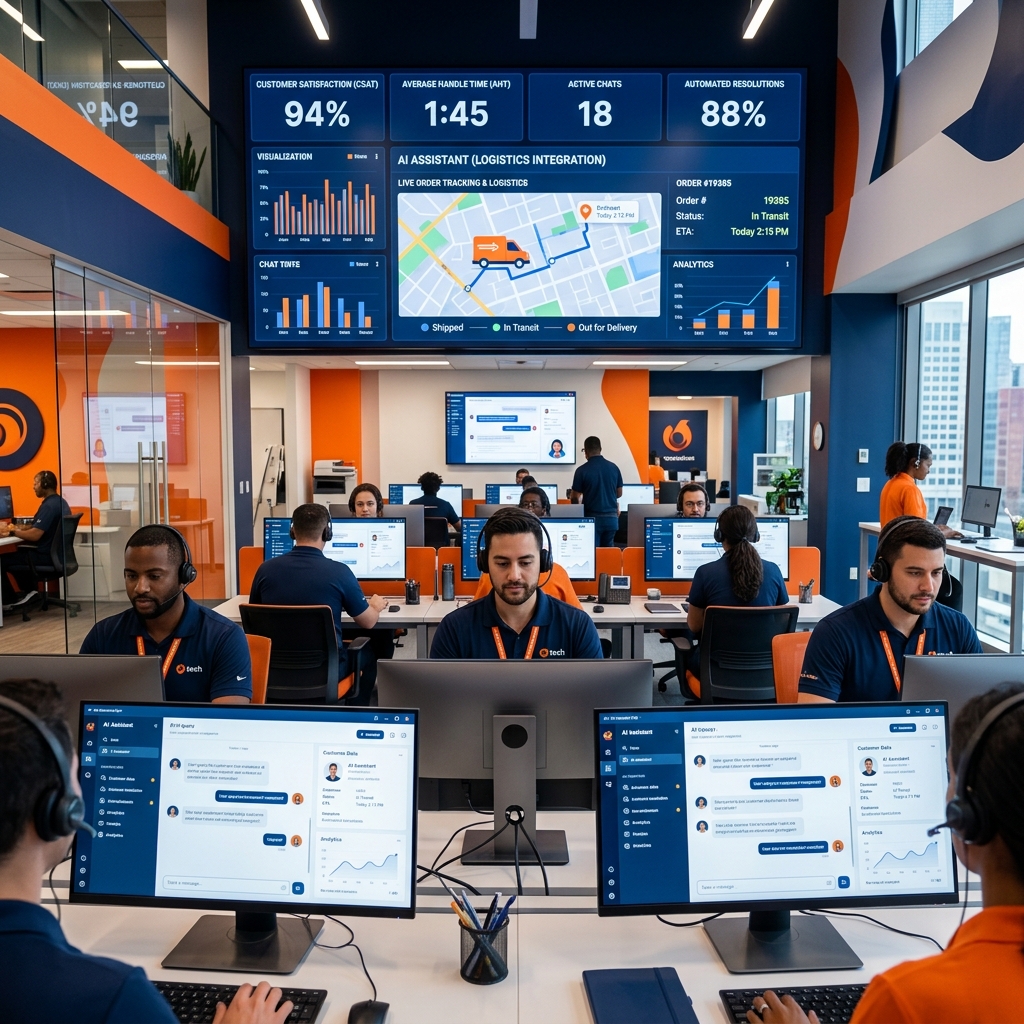
  • AI-Powered Customer Support Automation for a Global E-Commerce Platform

    AI-Powered Customer Support Automation for a Global E-Commerce Platform

    Industry: E-Commerce / Retail

    At a glance: MyntiQ Tech deployed an LLM-powered support assistant for a global e-commerce platform. It is trained on the brand’s policies and connected to Shopify and FedEx APIs for live order tracking. Basic questions, which made up over 70% of tickets, are automated, and sentiment analysis hands frustrated customers to human agents.

    Overview

    This case study details the implementation of an LLM-powered customer support chatbot for an international e-commerce platform. Integrated with inventory and logistics databases, the AI assistant automates customer inquiries and handles order-tracking updates at scale.

    Business Problem

    The e-commerce business faced scaling issues:

    • Holiday traffic spikes caused massive queues, leading to customer delays and cart abandonment.
    • Over 70% of support tickets were basic questions like “Where is my order?” or “How do I process a return?”
    • Staff spent hours copying tracking numbers, leaving little time for complex shipping disputes.

    How MyntiQ Tech Helped

    MyntiQ Tech built a smart conversational AI support system:

    • LLM Dialog Engine: Deployed an LLM trained on the brand’s policy docs to answer product and return questions accurately.
    • Real-Time API Integrations: Connected the chatbot with Shopify and FedEx APIs, allowing it to retrieve and share live tracking updates securely.
    • Sentiment Analysis Routing: Implemented sentiment analysis to transfer frustrated customers to human agents, along with the conversation log.

    Business Outcomes Delivered

    • Auto-resolved a high percentage of basic customer support tickets.
    • Reduced median support ticket response times, improving customer satisfaction metrics.
    • Protected support margins during high-traffic seasons without requiring temporary staff.

    Frequently Asked Questions

    Can an AI chatbot answer “Where is my order?”
    Yes. The assistant MyntiQ Tech built connects to Shopify and FedEx APIs to retrieve and share live tracking updates securely.

    How does the chatbot know store policies?
    The LLM is trained on the brand’s policy documents, so it answers product and return questions in line with those policies.

    When does the AI hand over to a human agent?
    Sentiment analysis spots frustrated customers and transfers them to a human agent along with the full conversation log.

    Scaling customer support with AI? Talk to MyntiQ Tech or browse more case studies.