Industry: Manufacturing (Automotive)
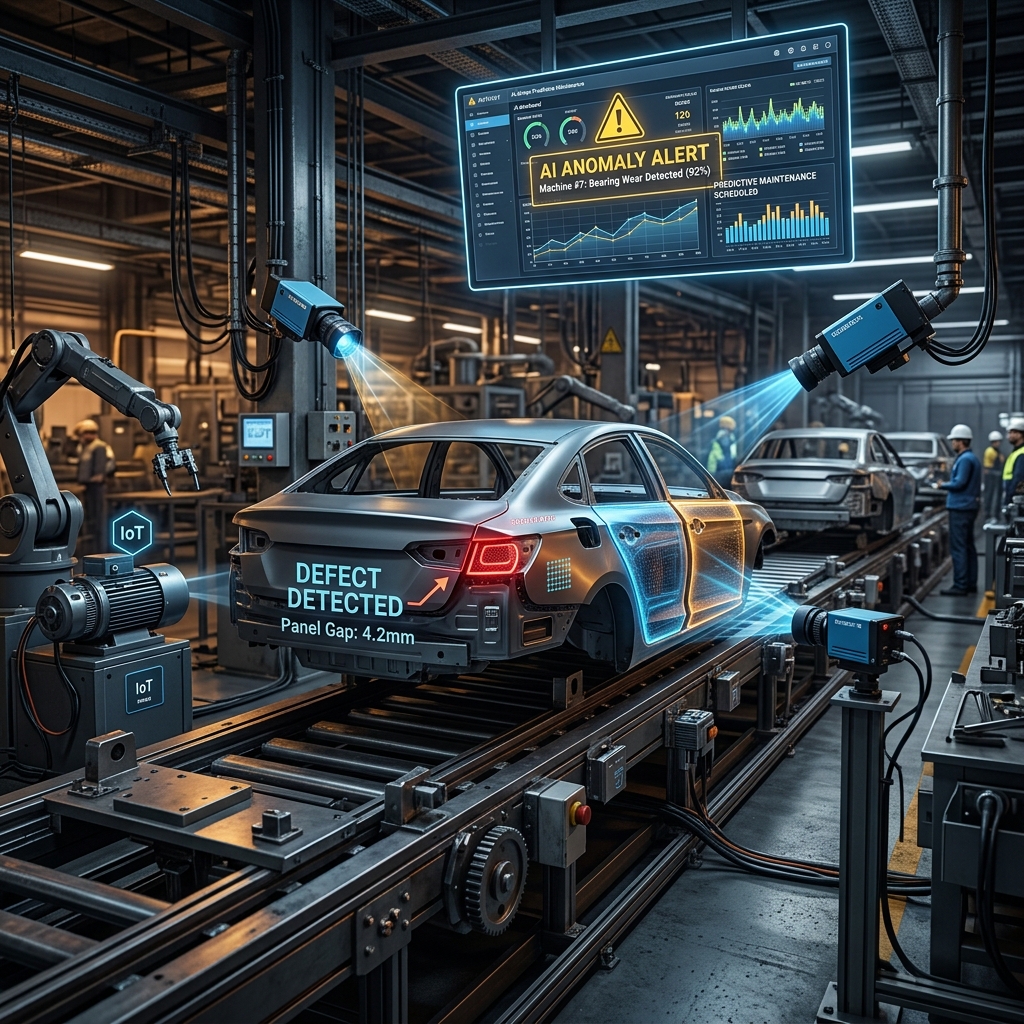
At a glance: MyntiQ Tech deployed computer vision and IoT analytics in an automotive parts plant. CNN-based cameras flag micro-defects on the line in milliseconds. Vibration, current and temperature sensors forecast machine failures up to two weeks ahead and trigger maintenance work orders in the MES.
Overview
This case study details the deployment of computer vision and IoT sensor models in an automotive parts assembly facility. The system automates quality control inspection on high-speed conveyor belts and predicts machine failures before they disrupt production schedules.
Business Problem
The manufacturing plant suffered from operational delays:
- Unplanned robotic arm failures stopped production, costing thousands of dollars in lost manufacturing capacity.
- Manual quality control inspection was slow and prone to human error, occasionally allowing micro-defects to slip through to assembly.
- Data from machine vibration and temperature sensors went unmonitored, limiting maintenance to static calendars.
How MyntiQ Tech Helped
MyntiQ Tech built a smart industrial monitoring solution:
- Computer Vision Inspection: Mounted high-speed industrial cameras on the assembly line, using convolutional neural networks (CNNs) to flag surface micro-scratches and structural defects in milliseconds.
- Predictive Maintenance Engine: Connected vibration, current, and temperature sensors on critical machines to predictive analytics models, forecasting mechanical failures up to two weeks in advance.
- Industrial IoT Integration: Integrated sensor feeds with the plant’s Manufacturing Execution System (MES) to trigger automatic work orders for maintenance crews.
Business Outcomes Delivered
- Reduced unplanned machinery downtime, protecting daily production quotas.
- Increased quality inspection throughput, processing parts continuously.
- Reduced defective parts escaping assembly to zero, eliminating related recall costs.
Frequently Asked Questions
How does AI inspect parts on a production line?
High-speed industrial cameras feed convolutional neural networks (CNNs) that flag surface micro-scratches and structural defects in milliseconds, without stopping the conveyor.
How far ahead can predictive maintenance forecast failures?
In this plant, models using vibration, current and temperature sensor data forecast mechanical failures up to two weeks in advance.
How do predictions become maintenance work?
Sensor feeds are connected to the plant’s Manufacturing Execution System (MES), which creates work orders for maintenance crews automatically.
Exploring AI or IoT for your plant? Talk to MyntiQ Tech or browse more case studies.