Author: Samir

  • AI-Driven Data Analytics

    Industry: SaaS / Enterprise Software

    Overview

    This case study details the development of a conversational, AI-driven data analytics platform designed for a high-growth SaaS enterprise. The solution integrates machine learning and Natural Language Processing (NLP) to enable business managers to query databases using plain English, automatically detect anomalies, and forecast key operational metrics in real-time.

    Business Problem

    The enterprise faced hurdles in turning raw data into actionable strategies:

    • Non-technical teams faced constant delays because they relied on data engineering resources to write SQL queries and generate reports.
    • Critical operational anomalies, such as sudden drops in user signup rates or unusual API error spikes, often went unnoticed for days.
    • The company lacked proactive forecasting tools, making it difficult to allocate server resources and plan marketing spend.

    How MyntiQ Tech Helped

    MyntiQ Tech built a smart analytics layer over the client’s data warehouse:

    • Conversational Analytics: Developed an NLP system that translates natural language questions into accurate SQL, allowing managers to ask questions like “What was the churn rate by category last month?”
    • Automated Anomaly Detection: Built machine learning models that scan database metrics to automatically flag and alert engineers of unusual spikes or drops in traffic.
    • Predictive Forecasts: Implemented time-series forecasting models to project client signup trends, resource utilization, and retention metrics.

    Business Outcomes Delivered

    • Empowered non-technical teams to query data instantly, removing dependency on database engineers.
    • Detected operational anomalies in minutes rather than days, protecting service levels and customer experience.
    • Improved resource forecasting accuracy, reducing monthly infrastructure costs through optimized server scaling.
  • Enterprise Data Warehouse & Analytics Platform for Large U.S. Eyecare Organization

    Industry: Healthcare (Eyecare)

    Overview

    This case study details the development and rollout of a large-scale enterprise data warehouse and analytics platform for one of the largest eyecare organizations in the United States. Operating across more than 550 practices nationwide, the platform unified operational, clinical, marketing, and financial analytics into a single, governed digital environment.

    Business Problem

    The organization faced severe reporting bottlenecks:

    • Operational, clinical, and financial data was decentralized across 550+ practices, each running its own reporting logic.
    • KPI definitions varied by region and division, making enterprise-wide performance comparison unreliable.
    • Reporting cycles were slow, depending on manual exports that lagged business reality by weeks.
    • The legacy database infrastructure could not support the reporting requirements of 300+ clinical and financial KPIs or handle new acquisitions.

    How MyntiQ Tech Helped

    MyntiQ Tech built a robust data warehouse and analytics layer:

    • Enterprise Data Warehouse: Created a centralized data warehouse with standardized dimensional models to unify clinical and operational data.
    • High-Performance OLAP: Implemented a StarRocks OLAP database to enable sub-second query speeds across multi-million row datasets.
    • Governed KPIs: Standardized and operationalized 300+ KPIs spanning clinical performance, marketing ROI, supply chain, and revenue cycle management.
    • Role-Based Dashboards: Designed and deployed 70+ interactive, role-based reports tailored for practice managers, regional directors, and executive leadership.

    Business Outcomes Delivered

    • Created a single source of truth for 300+ KPIs, aligning operational definitions nationwide.
    • Reduced query execution times from minutes to seconds, improving user engagement and decision speed.
    • Shifted reporting latency from weeks to near real-time, allowing clinics to adjust operations dynamically.
    • Built a highly scalable data infrastructure that supports new practices without performance loss.
  • Cloud-Native Analytics Platform for Managed Connectivity & Communications

    Industry: Telecommunications

    Overview

    This case study outlines how MyntiQ Tech designed and implemented a cloud-native analytics platform on AWS for a managed connectivity and communications service provider. By unifying data from multiple operational systems into a centralized analytics layer, the organization gained fast, reliable business insights without impacting the performance of its core transactional databases.

    Business Problem

    The telecommunications provider faced critical data challenges:

    • Operations spanned multiple managed services (including SD-WAN, Voice, SIP, and UCaaS) which were supported by eight independent transactional systems.
    • Data was siloed across these systems, making cross-product performance and customer lifetime value reporting slow and manual.
    • Analytical queries were run directly on live production databases, impacting system performance and risking downtime.
    • The existing reporting infrastructure could not scale to support increasing data volumes or concurrent analytical queries.

    How MyntiQ Tech Helped

    MyntiQ Tech developed a high-performance analytics solution:

    • Cloud-Native Architecture: Designed a secure analytics framework on AWS optimized for scale, speed, and reliability.
    • Centralized Data Warehouse: Built a unified OLAP data warehouse using StarRocks to consolidate data from all eight operational systems into a unified model.
    • Data Orchestration: Implemented cloud-native pipelines with automated data reconciliation checks to ensure consistency across sources.
    • Decoupled Presentation Layer: Exposed analytics via a secure API, allowing operations, finance, and leadership teams to pull data into custom dashboards.

    Business Outcomes Delivered

    • Delivered query performance that was significantly faster for complex, cross-product business analytics.
    • Eliminated analytical search loads on transactional systems, improving core database stability.
    • Created a single, consolidated view of customer accounts, service usages, and recurring revenue.
    • Supported data-driven decision-making across leadership, finance, and support departments.
  • End-to-End ERP & POS Implementation for Mobile Retail Store

    Industry: Retail

    Overview

    This case study details the implementation of a unified ERP and POS platform for a multi-location mobile retail business. The initiative consolidated procurement, inventory management, point-of-sale (POS) terminals, payment gateways, ledger accounting, and financial reporting into a single, integrated digital system. This solution provided the business with real-time operational visibility and accurate financial management across all retail branches.

    Business Problem

    Prior to implementation, the business struggled with several structural inefficiencies:

    • Core retail operations—purchasing, inventory tracking, POS transactions, and bookkeeping—were managed via disconnected legacy systems.
    • Inventory reconciliation was a manual, error-prone process, resulting in frequent stock discrepancies and operational delays.
    • Management lacked real-time visibility into inventory levels and financial performance across branch locations.
    • Processing complex customer transactions (such as split payments and device financing options) was operationally slow and frustrating for users.
    • Generating accurate and timely financial statements required significant manual reconciliation at the end of each month.

    How MyntiQ Tech Helped

    MyntiQ Tech designed and deployed a comprehensive retail operations platform:

    • Unified ERP: Consolidated procurement, inventory control, warehousing, POS billing, payments, and bookkeeping in a single system.
    • Barcode-Enabled POS: Delivered a high-performance billing solution with real-time stock updates to support high-volume store transactions.
    • Payment Integration: Supported multiple payment modes, including digital wallets, POS terminals, split transactions, and consumer finance integrations.
    • Automated Accounting: Enabled system-driven ledger postings and real-time bank reconciliation to simplify financial workflows.

    Business Outcomes Delivered

    • Established a single, unified source of truth across all retail branches.
    • Enabled faster, more reliable customer billing with 100% real-time stock accuracy.
    • Drastically reduced inventory discrepancies and eliminated manual reconciliation efforts.
    • Automated financial statements, improving overall audit readiness and closing cycles.
  • Predictive Analytics in Healthcare: Using AI to Forecast Patient Risk and Demand

    Predictive Analytics in Healthcare: Using AI to Forecast Patient Risk and Demand

    From Retrospective Data to Predictive Foresight

    Traditionally, healthcare operations have relied on retrospective reporting—analyzing historical data to understand past trends, such as admission rates last month or clinical supply usage over the previous quarter. While historical analysis is helpful, it only allows healthcare networks to react to problems after they have occurred.

    Today, predictive analytics in healthcare is changing this approach. By training machine learning models on longitudinal Electronic Health Record (EHR) data, demographic trends, and seasonal metrics, hospital networks can forecast patient risk, anticipate staffing demand, and optimize clinical supply chains before bottlenecks emerge.

    This shift from retrospective reports to predictive foresight is enabling healthcare systems to operate more efficiently while improving patient outcomes.

    Forecasting Patient Admission Risk

    One of the most valuable applications of predictive AI is identifying patients at high risk of clinical deterioration or chronic readmissions. Machine learning models can scan patient records to identify subtle combinations of risk factors—such as medication changes, past admission frequencies, and lab results—that indicate a high likelihood of readmission within 30 days.

    When the system flags an at-risk patient, clinical teams can intervene early, scheduling preventative check-ins, arranging home health support, or adjusting care plans. Proactive intervention not only improves patient recovery rates but also reduces penalties associated with preventable hospital readmissions.

    Anticipating Hospital Resource Demand

    Managing resource capacity—such as bed availability, intensive care unit (ICU) occupancy, and emergency department staffing—is a constant operational challenge. Understaffing leads to patient delays and staff exhaustion, while overstaffing increases operating costs unnecessarily.

    Predictive analytics models analyze historical admissions, weather forecasts, local health trends, and calendar metrics to predict emergency department arrivals and bed demand. Hospital administrators can use these forecasts to adjust nurse-to-patient staffing ratios dynamically, ensuring optimal coverage during spikes in admissions while controlling labor costs during quieter periods.

    Optimizing the Medical Supply Chain

    Clinical supply chains are highly sensitive; shortages of critical pharmaceuticals, personal protective equipment (PPE), or surgical devices can disrupt care, while overstocking leads to high holding costs and waste due to expiration.

    By connecting inventory management platforms with predictive demand models, healthcare networks can automate ordering cycles. The system forecasts the consumption of specific supplies based on scheduled procedures and seasonal trends, ensuring that clinics are stocked precisely according to projected clinical needs.

    Harnessing Analytics with MyntiQ Tech

    Implementing predictive analytics in healthcare requires secure data pipelines, centralized data warehousing, and validated machine learning models. At MyntiQ Tech, we help healthcare networks build data architectures that aggregate data from EHRs, scheduling systems, and inventory databases.

    By turning fragmented healthcare logs into actionable predictive models, we enable providers to streamline clinical support, manage resources efficiently, and deliver proactive patient care.

  • HIPAA-Compliant Conversational AI: Safe, Automated Virtual Assistants for Healthcare

    HIPAA-Compliant Conversational AI: Safe, Automated Virtual Assistants for Healthcare

    The Patient Access Challenge

    Modern patient expectations have shifted. Today’s patients expect the same immediate, digital-first communication from their healthcare providers that they receive from retail or financial services. They want to schedule appointments, request prescription refills, and ask medical questions at any time of day, without waiting on hold for administrative staff.

    However, medical clinics and hospital networks operate under heavy administrative burdens. Front-desk teams are often overwhelmed with high phone volumes, leading to patient delays and staff burnout.

    Healthcare virtual assistants offer a scalable solution, automating patient communication while reducing administrative overhead. But in healthcare, automation must always be built on a foundation of absolute security and strict regulatory compliance.

    The Compliance Mandate: Building for HIPAA

    Unlike customer service chatbots in other industries, a healthcare virtual assistant deals with Protected Health Information (PHI). Any system that handles patient names, medical histories, symptom descriptions, or appointment details must comply with the Health Insurance Portability and Accountability Act (HIPAA).

    To meet these strict standards, clinical chatbots require specialized security protocols:

    • End-to-End Encryption: All patient messages must be encrypted in transit and at rest, ensuring that data cannot be intercepted or read by unauthorized parties.
    • Strict Access Controls: Only authenticated clinical personnel should have access to patient chat histories and derived data.
    • Detailed Audit Trails: Every interaction, data access event, and system change must be logged to maintain a transparent compliance record.
    • Business Associate Agreements (BAAs): The technology partner hosting the AI infrastructure must sign a BAA, contractually committing to protecting PHI.

    Without these measures, using conversational AI in clinical operations introduces severe compliance risks and threatens patient trust.

    Key Automated Patient Workflows

    When built securely, HIPAA-compliant virtual assistants can streamline patient-facing clinical workflows:

    • Intelligent Patient Triage: Asking structured symptom questions based on clinical guidelines to direct patients to the right level of care (primary care, urgent care, or emergency services).
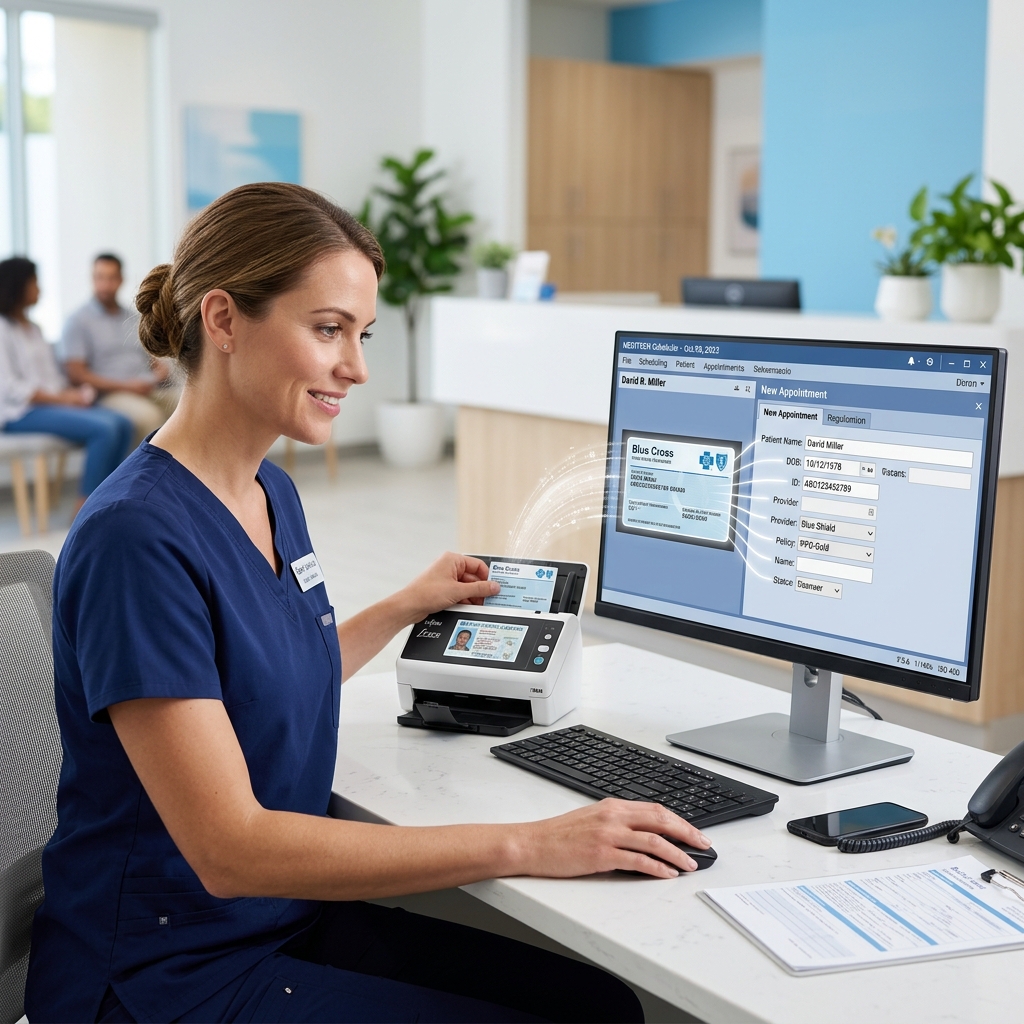
    • EHR-Integrated Scheduling: Allowing patients to check provider availability, book visits, and reschedule appointments directly through chat, updating the Electronic Health Record (EHR) instantly.
    • Automated Refill Requests: Gathering prescription details from patients and routing them to the clinic’s EHR queue for physician approval, reducing phone calls.

    These automated workflows eliminate bottlenecks, allowing clinics to manage higher patient volumes efficiently.

    Building Compliant Virtual Assistants with MyntiQ Tech

    Deploying conversational AI in healthcare requires deep technical expertise in both machine learning and health IT security. At MyntiQ Tech, we design and deploy HIPAA-compliant virtual assistants that integrate directly with clinical systems like EHRs and pharmacy portals.

    By combining secure data architecture, advanced encryption, and conversational intelligence, we help healthcare providers improve patient access, lower administrative costs, and protect patient data security.

  • AI in Medical Diagnostics: How Computer Vision is Transforming Imaging Workflows

    AI in Medical Diagnostics: How Computer Vision is Transforming Imaging Workflows

    The Diagnostic Bottleneck

    Radiological and diagnostic imaging departments are under unprecedented strain. The volume of scans—including X-rays, MRIs, and CT scans—continues to grow as populations age and diagnostics become more integrated into patient care. With a limited number of specialized radiologists, diagnostic centers face growing backlogs, leading to longer wait times for patient results.

    To address this bottleneck, clinical leaders are integrating computer vision and deep learning models into medical imaging workflows. Rather than replacing medical professionals, diagnostic AI acts as a highly sensitive assistant, scanning images in seconds, identifying anomalies, and helping clinical teams make faster, more accurate decisions.

    This integration of AI is transforming radiology from a manual reading workflow into an intelligent, data-driven diagnostic process.

    How Computer Vision Analyzes Scans

    Medical imaging AI uses deep learning algorithms, particularly convolutional neural networks (CNNs), which are trained on millions of anonymized clinical images. These models are capable of identifying pixel-level patterns that may be difficult for the human eye to detect instantly, especially in high-volume, repetitive environments.

    When a scan is completed, the AI analyzes the image, looking for signs of specific conditions—such as fractures, pulmonary embolisms, lung nodules, or internal hemorrhages. It highlights regions of interest for the radiologist, providing a valuable “second set of eyes” that reduces the likelihood of overlooked anomalies due to fatigue.

    Triage and Priority Queue Management

    One of the most immediate benefits of computer vision in clinical settings is triage optimization. In a traditional workflow, scans are reviewed in the order they are completed. If a patient with a critical, life-threatening condition (such as an acute brain bleed) is scanned, their images might sit in a queue for hours before a radiologist opens them.

    AI-driven triage systems analyze scans instantly upon completion. If the model detects a critical abnormality, it automatically flags the case and moves it to the top of the radiologist’s review queue. This ensures that patients requiring immediate intervention receive diagnostic review in minutes rather than hours, saving lives in emergency care settings.

    Ensuring Safe and Compliant Integration

    Deploying AI models in clinical environments requires strict compliance and interoperability. Diagnostic systems must connect seamlessly with hospital Picture Archiving and Communication Systems (PACS) and Electronic Health Records (EHRs) using HL7 and FHIR standards. Furthermore, data security is paramount; all patient scans must be processed in compliance with strict privacy regulations (such as HIPAA).

    Building Clinical Pipelines with MyntiQ Tech

    Successful AI adoption in healthcare depends on secure data pipelines, robust model validation, and seamless system integration. At MyntiQ Tech, we help healthcare organizations build and integrate medical imaging AI workflows.

    By connecting PACS infrastructure with secure, high-performance machine learning engines, we enable clinics to reduce diagnostic backlogs, support clinical accuracy, and deliver faster patient care.

  • Conversational AI in Action: Transforming Enterprise Operations with Intelligent Chatbots

    Conversational AI in Action: Transforming Enterprise Operations with Intelligent Chatbots

    Beyond Static Scripts

    For years, businesses have utilized basic chatbots to handle customer queries and automate support. However, early chatbot models were built on rigid, rule-based decision trees. If a user asked a question that deviated even slightly from the programmed script, the bot failed, leading to circular loops, user frustration, and ultimately, an immediate handoff to human support.

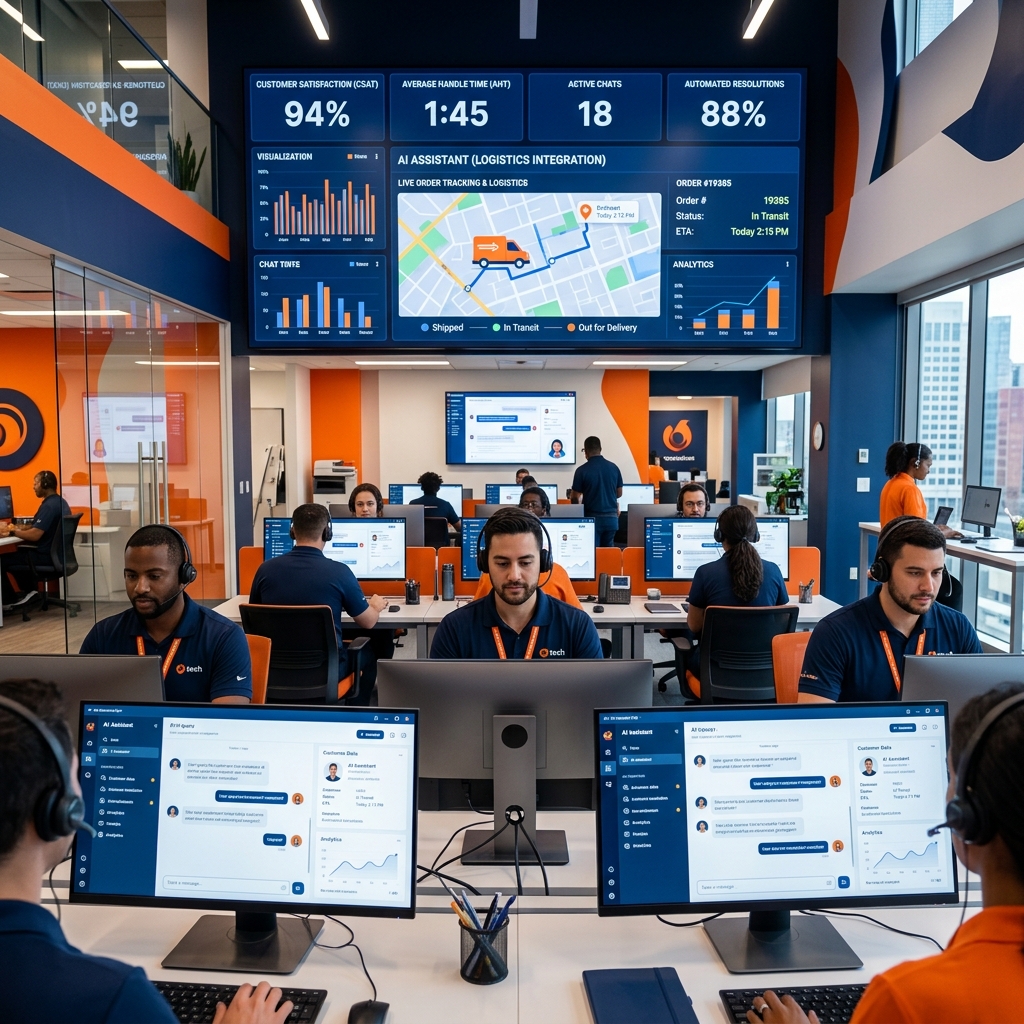
    Today, conversational AI is replacing these static scripts. Leveraging advancements in Natural Language Processing (NLP) and Large Language Models (LLMs), modern intelligent chatbots understand intent, context, and sentiment. They turn conversational interfaces into powerful, automated tools capable of driving complex workflows across the enterprise.

    This shift from basic auto-responders to intelligent virtual assistants is redefining both customer experience and internal operations.

    The Power of Semantic Understanding

    Modern conversational AI models do not rely on simple keyword matching. Instead, they utilize semantic search and context analysis to understand what a user is actually trying to accomplish. Whether a customer asks “Where is my package?”, “Has my order shipped yet?”, or “Can I track my delivery?”, the chatbot recognizes the shared intent and pulls the correct data from back-office systems.

    This capability allows chatbots to hold natural, multi-turn conversations. They can ask clarifying questions, remember details from earlier in the chat, and deliver precise answers tailored to the user’s specific circumstances.

    Automating Complex Enterprise Workflows

    The true value of conversational AI lies in its ability to execute tasks, not just answer questions. By integrating chatbots with Customer Relationship Management (CRM) databases, Enterprise Resource Planning (ERP) platforms, and internal IT service desks, organizations can automate end-to-end workflows.

    An enterprise AI chatbot can:

    • Resolve IT Tickets: Automatically reset user passwords, unlock accounts, or guide employees through software configuration.
    • Manage Orders: Allow customers to update their shipping address, cancel orders, or process returns directly within the chat window.
    • Schedule Meetings: Sync with provider calendars to book appointments, send reminders, and manage reschedules.

    By handling these high-volume, low-complexity tasks, chatbots free up human support teams to focus on complex, high-touch inquiries.

    Seamless Human-AI Collaboration

    An effective conversational AI strategy does not eliminate the human element; it enhances it. When a query is too complex or sensitive for a chatbot to resolve, the assistant handles the transition to a human support agent smoothly.

    The chatbot passes the entire conversation log, user profile, and an AI-generated summary of the problem to the agent. This ensures that the customer does not have to repeat their issue, reducing resolution times and improving satisfaction.

    Scale Operations with MyntiQ Tech

    Deploying conversational AI at scale requires robust data integration, secure API connections, and continuous model training. At MyntiQ Tech, we help enterprises design, build, and deploy custom conversational AI platforms that integrate with existing systems.

    By combining natural language understanding with workflow automation, we enable organizations to deliver fast, consistent, and secure experiences for customers and employees alike.

  • Why Multi-Location Businesses Struggle With Operational Visibility

    Why Multi-Location Businesses Struggle With Operational Visibility

    The Expansion Blind Spot

    Opening new branches, regional offices, or distribution centers is a clear indicator of business success. However, growth often introduces a quiet challenge: operational visibility starts to disappear. A business that once operated from a single location suddenly finds itself managing multiple teams, local vendors, and inconsistent processes across branches.

    As operations expand, questions that were once simple to answer begin taking days to resolve. Which branch is performing best? Where are supply chain delays originating? Which regional team needs support before customer satisfaction declines?

    Without unified systems, leaders end up making critical strategic decisions based on delayed, incomplete, or disconnected information.

    The Complexity of Distributed Branches

    Opening new locations adds structural complexity. Over time, individual branches naturally develop their own routines, workarounds, and reporting habits. What runs smoothly in one location may be handled differently in another, creating process gaps that make organization-wide consistency difficult to maintain.

    The business continues to grow on paper, but leadership teams lose touch with daily operations on the ground, creating blind spots that can lead to unexpected losses.

    Information Silos: Data Everywhere but No Insights

    Most multi-location businesses do not suffer from a shortage of data. In fact, they generate massive volumes of information:

    • Daily sales reports and local inventory counts
    • Staffing schedules and regional labor costs
    • Customer satisfaction surveys and refund rates
    • Local supplier delivery logs

    The challenge is not collecting the data, but bringing it together. When metrics are scattered across local spreadsheets, separate software installations, and regional emails, teams waste time consolidating files instead of analyzing performance.

    Delayed Visibility Leads to Delayed Action

    When leadership cannot see what is happening across branches in real-time, minor operational friction can grow into major business problems. A stock shortage at a busy branch may go unnoticed until sales plummet. A performance drop at a regional center might continue for weeks before it shows up in a monthly rollup report.

    These delays impact profitability, efficiency, and customer trust. A centralized, real-time operations dashboard solves this by aggregating metrics instantly, allowing decision-makers to intervene and optimize performance before issues spread.

    Unifying Multi-Branch Operations with Centralized Reporting

    The most effective way to eliminate operational blind spots is to establish centralized reporting for multi-branch operations. By connecting all data sources into a single source of truth, businesses can ensure that everyone, from branch managers to C-level executives, is working from the same real-time information.

    Centralization reduces reporting errors, makes performance comparison transparent, and fosters stronger collaboration across the entire enterprise.

    Aligning Distributed Operations with MyntiQ Tech

    Scaling a multi-location enterprise successfully requires maintaining control and clarity as you grow. At MyntiQ Tech, we build centralized reporting systems and custom operations dashboards that pull data from distributed branches into a single, intuitive interface.

    By connecting your databases, sales tools, and inventory systems, we help you eliminate operational blind spots, respond faster to changes, and maintain consistency across every location.

  • Building Scalable Real Estate Operations: Digital Transformation for Modern Property Portfolios

    Building Scalable Real Estate Operations: Digital Transformation for Modern Property Portfolios

    Managing Complexity in Modern Real Estate

    As real estate investment trusts (REITs), property management firms, and asset managers expand their holdings, the complexity of their daily operations increases exponentially. Managing tenant leasing cycles, vendor schedules, energy usage, security, and maintenance requests across multiple properties quickly creates operational bottlenecks if supported only by traditional, manual systems.

    In many real estate enterprises, data remains siloed: leasing details sit in one database, maintenance logs are tracked in spreadsheets, and utility bills are handled by separate finance teams. Without a unified view of asset performance, leaders struggle to identify inefficiencies, predict capital expenditures, and make fast, data-driven decisions.

    Digital transformation in real estate is shifting the focus from manual property management to connected, scalable operations that optimize portfolio yield and improve the tenant experience.

    The Siloed Property Problem

    The primary barrier to scaling real estate operations is fragmented information. When property managers, maintenance crews, and accounting teams operate without connected platforms, delays are inevitable.

    This lack of structural visibility leads to:

    • Slow response times to maintenance requests, reducing tenant satisfaction
    • Under-utilized assets and delayed vacancy cycles
    • Utility cost leaks due to unmonitored heating, cooling, or water systems
    • Inaccurate asset valuation due to delayed operational data

    To overcome these challenges, progressive property managers are adopting centralized platforms that bring real-time property, financial, and mechanical data into a single operational dashboard.

    Leveraging IoT and Smart Building Technology

    Modern properties are no longer static assets; they are active sources of data. Internet of Things (IoT) sensors, smart access controls, and connected utility meters allow managers to monitor building health and occupancy continuously.

    For example, integrating smart thermostats and lighting controls allows commercial buildings to adjust energy consumption based on real-time occupancy, directly lowering operating expenses. Smart water sensors can detect leaks in unoccupied units, preventing costly damage before it escalates.

    Shifting to Predictive Maintenance

    Traditional property maintenance is reactive—a tenant reports an issue, or equipment breaks, and a technician is dispatched. This approach is both expensive and disruptive.

    Predictive maintenance uses data from building sensors to identify signs of wear in critical systems like HVAC units, elevators, and electrical grids. By scheduling maintenance based on actual equipment performance, real estate firms extend the lifespan of their assets, prevent sudden outages, and avoid emergency repair fees.

    Streamlining Leasing and Tenant Workflows

    Lease administration, tenant onboarding, and payment processing are prime candidates for workflow automation. By automating contract generation, background checks, and billing cycles, real estate firms can reduce the administrative workload on their leasing teams, allowing them to focus on tenant retention and portfolio growth.

    Partnering for Real Estate Success with MyntiQ Tech

    Scalable real estate operations require the integration of physical building technology, financial databases, and secure user portals. At MyntiQ Tech, we design unified digital platforms that bring visibility and efficiency to property management.

    By connecting IoT data, financial analytics, and automated workflows, we help real estate enterprises reduce overhead, improve energy efficiency, and build property portfolios designed for long-term scalability.