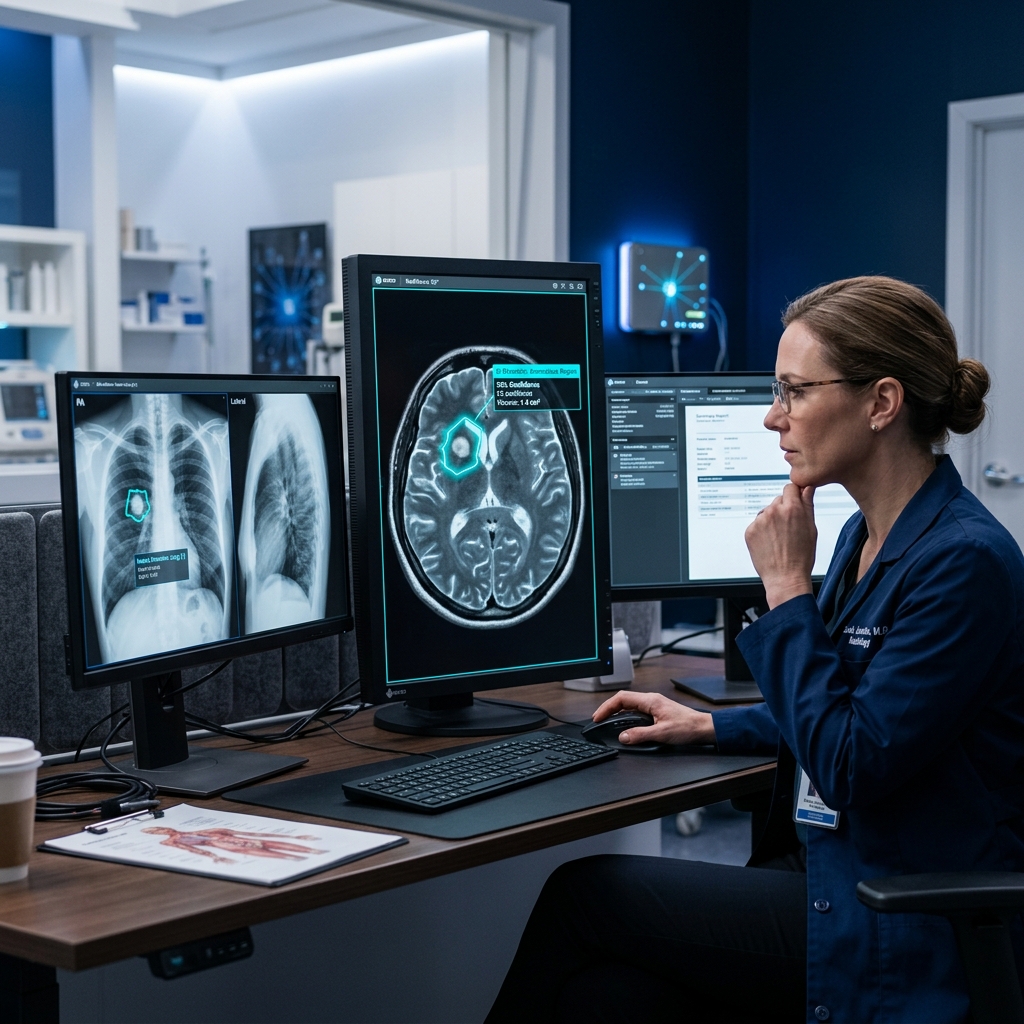
The Diagnostic Bottleneck
Radiological and diagnostic imaging departments are under unprecedented strain. The volume of scans—including X-rays, MRIs, and CT scans—continues to grow as populations age and diagnostics become more integrated into patient care. With a limited number of specialized radiologists, diagnostic centers face growing backlogs, leading to longer wait times for patient results.
To address this bottleneck, clinical leaders are integrating computer vision and deep learning models into medical imaging workflows. Rather than replacing medical professionals, diagnostic AI acts as a highly sensitive assistant, scanning images in seconds, identifying anomalies, and helping clinical teams make faster, more accurate decisions.
This integration of AI is transforming radiology from a manual reading workflow into an intelligent, data-driven diagnostic process.
How Computer Vision Analyzes Scans
Medical imaging AI uses deep learning algorithms, particularly convolutional neural networks (CNNs), which are trained on millions of anonymized clinical images. These models are capable of identifying pixel-level patterns that may be difficult for the human eye to detect instantly, especially in high-volume, repetitive environments.
When a scan is completed, the AI analyzes the image, looking for signs of specific conditions—such as fractures, pulmonary embolisms, lung nodules, or internal hemorrhages. It highlights regions of interest for the radiologist, providing a valuable “second set of eyes” that reduces the likelihood of overlooked anomalies due to fatigue.
Triage and Priority Queue Management
One of the most immediate benefits of computer vision in clinical settings is triage optimization. In a traditional workflow, scans are reviewed in the order they are completed. If a patient with a critical, life-threatening condition (such as an acute brain bleed) is scanned, their images might sit in a queue for hours before a radiologist opens them.
AI-driven triage systems analyze scans instantly upon completion. If the model detects a critical abnormality, it automatically flags the case and moves it to the top of the radiologist’s review queue. This ensures that patients requiring immediate intervention receive diagnostic review in minutes rather than hours, saving lives in emergency care settings.
Ensuring Safe and Compliant Integration
Deploying AI models in clinical environments requires strict compliance and interoperability. Diagnostic systems must connect seamlessly with hospital Picture Archiving and Communication Systems (PACS) and Electronic Health Records (EHRs) using HL7 and FHIR standards. Furthermore, data security is paramount; all patient scans must be processed in compliance with strict privacy regulations (such as HIPAA).
Building Clinical Pipelines with MyntiQ Tech
Successful AI adoption in healthcare depends on secure data pipelines, robust model validation, and seamless system integration. At MyntiQ Tech, we help healthcare organizations build and integrate medical imaging AI workflows.
By connecting PACS infrastructure with secure, high-performance machine learning engines, we enable clinics to reduce diagnostic backlogs, support clinical accuracy, and deliver faster patient care.