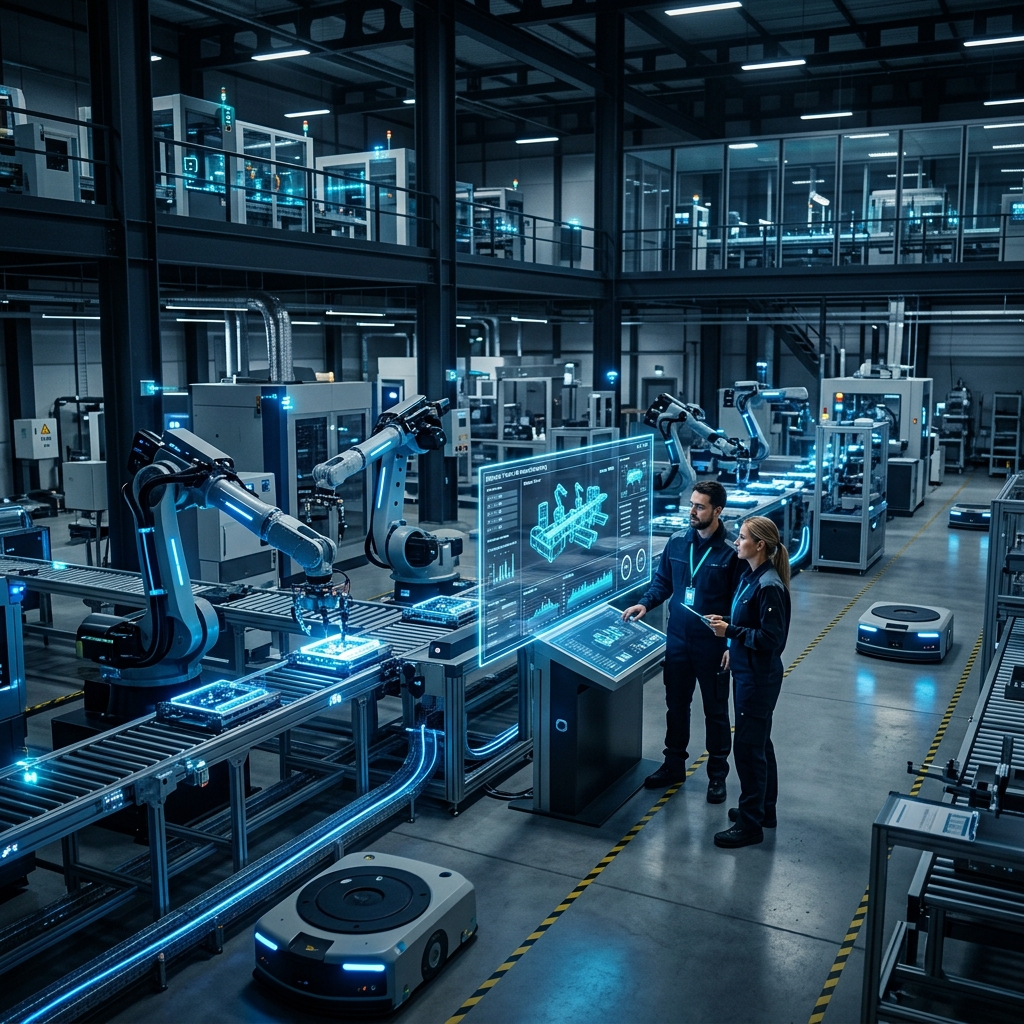
The Modern Manufacturing Challenge
Manufacturing companies today face a complex array of challenges. Customer demands are shifting rapidly, supply chains are increasingly unpredictable, and production timelines continue to tighten. Despite these changes, many businesses still operate with legacy software systems that were designed decades ago, making it difficult to adapt when market conditions shift.
As manufacturing enterprises grow, disconnected processes and outdated software create visible friction—unplanned downtime, delayed production schedules, and higher operational costs. To stay competitive, manufacturers must shift from rigid production structures to connected, flexible workflows that support growth without compromising quality or speed.
This is where scalable manufacturing systems become critical, allowing companies to expand their capacity while maintaining operational continuity.
The Need for Connected, Smart Operations
Traditional manufacturing setups often struggle during periods of rapid growth. When machines operate in silos and departments work with disconnected data, decision-making becomes slow and reactive because leaders lack real-time visibility into the shop floor.
This lack of integration often leads to:
- Delayed production planning and scheduling
- Extended downtime due to reactive maintenance
- Difficulty maintaining consistent quality across batches
- Process gaps when introducing new product lines
By connecting systems and applications, smart manufacturing bridges the gap between machines, databases, and operational teams. Real-time monitoring allows managers to identify bottlenecks early, optimize resource allocation, and scale operations smoothly.
Modernizing Without Halting Production
A common misconception is that upgrading manufacturing systems requires a complete, risky system overhaul that halts production. In reality, modern digital transformation relies on a phased approach. By introducing integration layers, manufacturers can connect legacy systems to modern cloud applications, allowing data to flow seamlessly while maintaining core operational stability.
Running systems in parallel during migration ensures that data integrity is qualified and that workflows remain undisrupted. This evolutionary approach minimizes risk while providing the flexibility needed to scale.
Building Resilient Operations
Resilience is the ability to maintain consistent production despite supply chain disruptions or regulatory changes. Modern manufacturing environments require systems that can simulate scenarios, forecast capacity, and adjust schedules dynamically.
Adopting cloud-connected architectures allows manufacturers to consolidate data from multiple plants into a single dashboard. This visibility enables managers to compare performance, allocate resources effectively, and make proactive decisions based on predictive insights rather than historical reports.
Unlocking Growth with MyntiQ Tech
Modern manufacturing demands connected workflows, real-time insights, and scalable technology. At MyntiQ Tech, we help manufacturers modernize their digital infrastructure in measured, low-risk phases.
By integrating automation, cloud solutions, and data analytics, we help businesses eliminate operational silos, improve shop-floor efficiency, and build a resilient foundation for long-term growth.