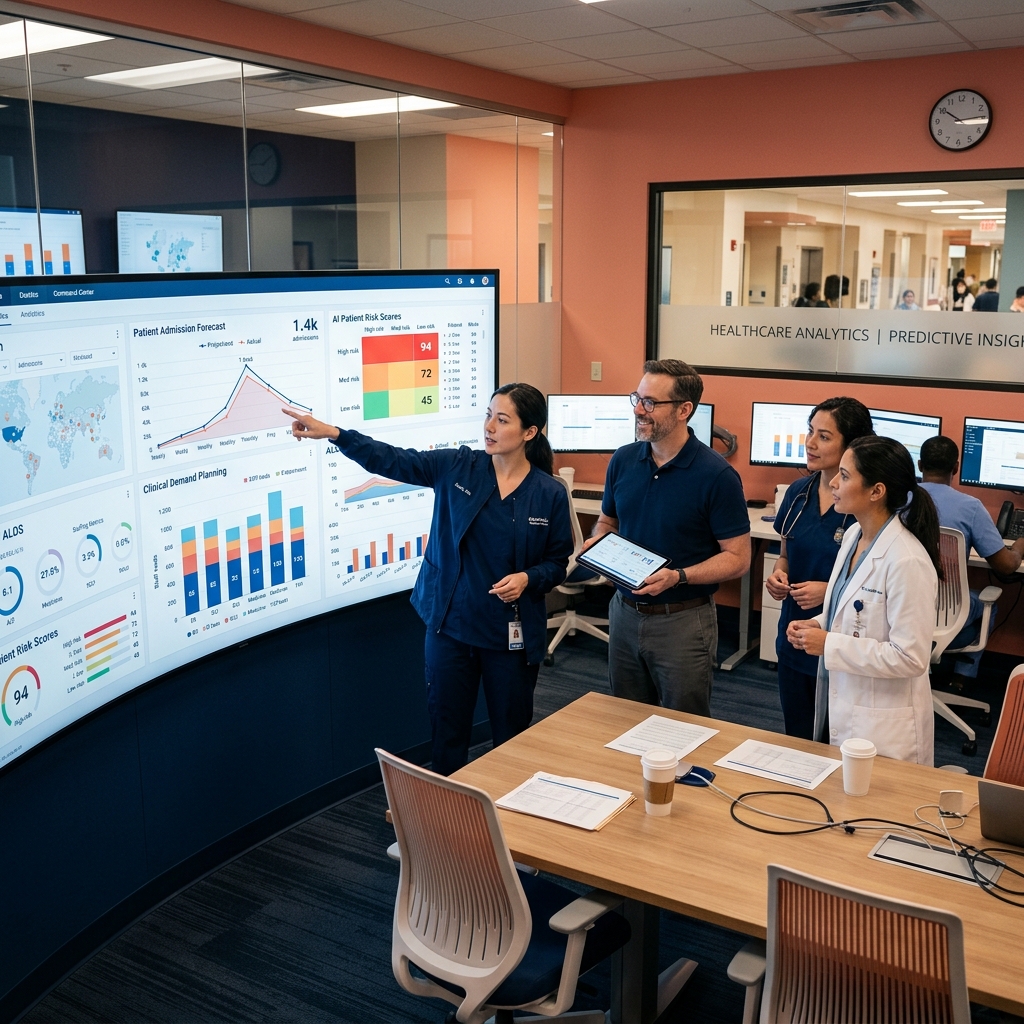
From Retrospective Data to Predictive Foresight
Traditionally, healthcare operations have relied on retrospective reporting—analyzing historical data to understand past trends, such as admission rates last month or clinical supply usage over the previous quarter. While historical analysis is helpful, it only allows healthcare networks to react to problems after they have occurred.
Today, predictive analytics in healthcare is changing this approach. By training machine learning models on longitudinal Electronic Health Record (EHR) data, demographic trends, and seasonal metrics, hospital networks can forecast patient risk, anticipate staffing demand, and optimize clinical supply chains before bottlenecks emerge.
This shift from retrospective reports to predictive foresight is enabling healthcare systems to operate more efficiently while improving patient outcomes.
Forecasting Patient Admission Risk
One of the most valuable applications of predictive AI is identifying patients at high risk of clinical deterioration or chronic readmissions. Machine learning models can scan patient records to identify subtle combinations of risk factors—such as medication changes, past admission frequencies, and lab results—that indicate a high likelihood of readmission within 30 days.
When the system flags an at-risk patient, clinical teams can intervene early, scheduling preventative check-ins, arranging home health support, or adjusting care plans. Proactive intervention not only improves patient recovery rates but also reduces penalties associated with preventable hospital readmissions.
Anticipating Hospital Resource Demand
Managing resource capacity—such as bed availability, intensive care unit (ICU) occupancy, and emergency department staffing—is a constant operational challenge. Understaffing leads to patient delays and staff exhaustion, while overstaffing increases operating costs unnecessarily.
Predictive analytics models analyze historical admissions, weather forecasts, local health trends, and calendar metrics to predict emergency department arrivals and bed demand. Hospital administrators can use these forecasts to adjust nurse-to-patient staffing ratios dynamically, ensuring optimal coverage during spikes in admissions while controlling labor costs during quieter periods.
Optimizing the Medical Supply Chain
Clinical supply chains are highly sensitive; shortages of critical pharmaceuticals, personal protective equipment (PPE), or surgical devices can disrupt care, while overstocking leads to high holding costs and waste due to expiration.
By connecting inventory management platforms with predictive demand models, healthcare networks can automate ordering cycles. The system forecasts the consumption of specific supplies based on scheduled procedures and seasonal trends, ensuring that clinics are stocked precisely according to projected clinical needs.
Harnessing Analytics with MyntiQ Tech
Implementing predictive analytics in healthcare requires secure data pipelines, centralized data warehousing, and validated machine learning models. At MyntiQ Tech, we help healthcare networks build data architectures that aggregate data from EHRs, scheduling systems, and inventory databases.
By turning fragmented healthcare logs into actionable predictive models, we enable providers to streamline clinical support, manage resources efficiently, and deliver proactive patient care.